
Join us in celebrating the Grenadiers and the Tubaroes Azuis on the World Stage this summer. Visit our store today!

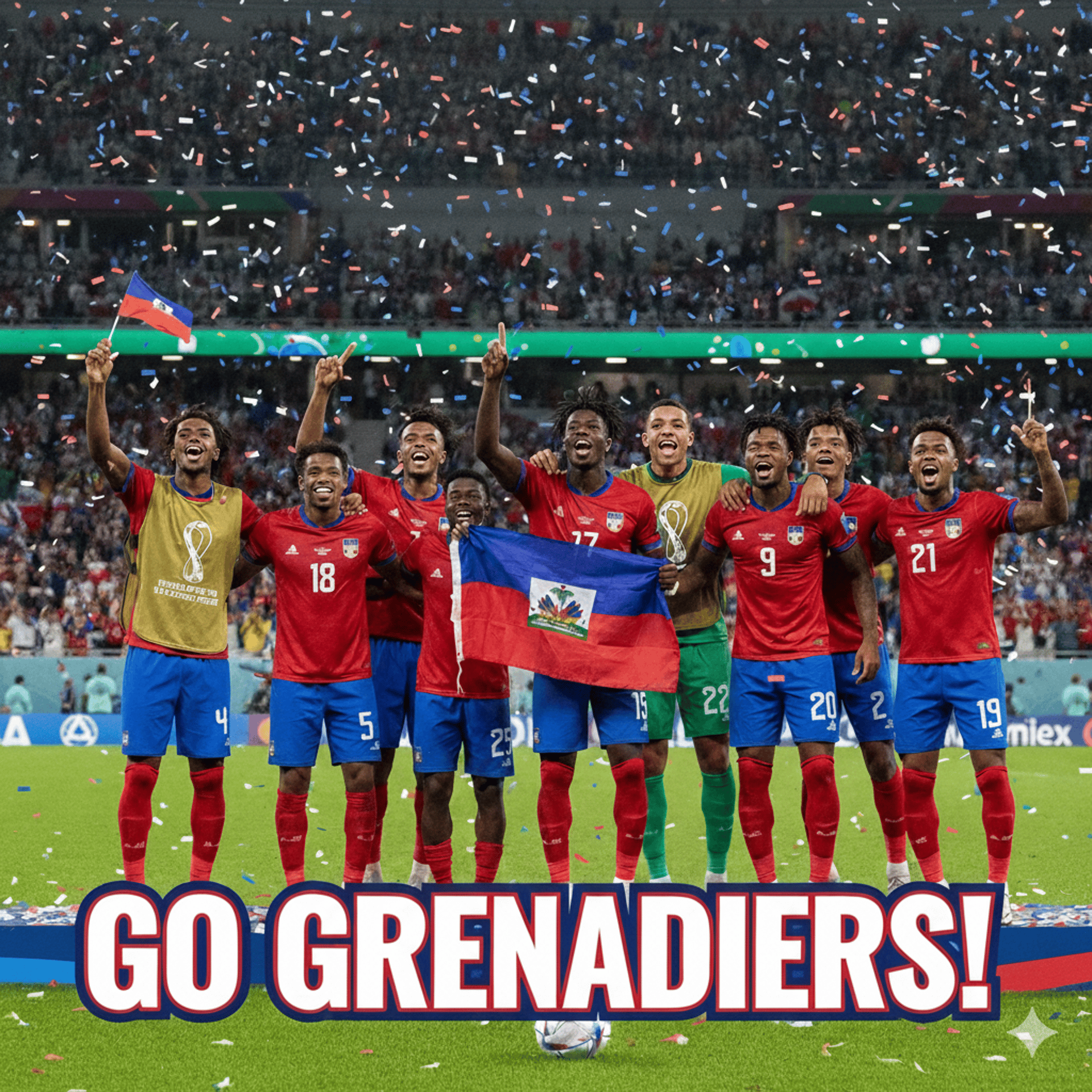
The Heartbeat of a Nation: Soccer’s Indelible Mark on Haitian History and Culture
Explore the significance of soccer in Haiti's history and culture.
1/28/2026
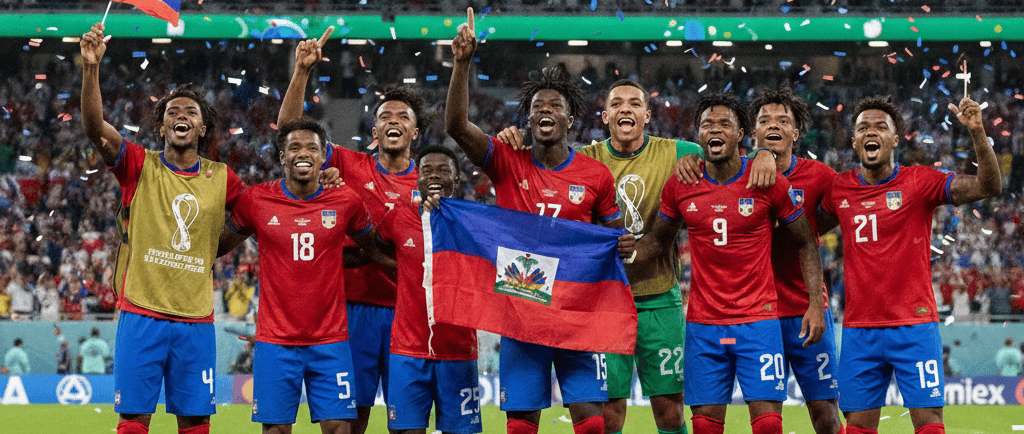
In Haiti, soccer—or balon won—is far more than a sport. It is a shared language, a source of fierce national pride, and a resilient thread woven through the country’s complex history. From the streets of Port-au-Prince to the international stage, the beautiful game has mirrored Haiti’s triumphs and its struggles.
The Early Years: Planting the Seeds
Soccer took root in Haiti in the early 20th century, largely influenced by European residents and the growing urban elite. The Fédération Haïtienne de Football (FHF) was founded in 1904, making it one of the oldest soccer federations in the Caribbean.
In these early decades, clubs like Racing Club Haïtien, Aigle Noir, Victory, and Violette AC weren't just sports teams; they were social institutions. They provided a sense of community and identity during a period of significant political transition.
The Golden Era: 1974 and the World Stage
If you ask any Haitian elder about the pinnacle of the sport, they will point to 1974. This was the year Haiti became the first Caribbean nation to qualify for the FIFA World Cup in West Germany.
The Manno Sanon Moment: In a legendary match against Italy, Haitian forward Emmanuel "Manno" Sanon did the unthinkable: he scored against Dino Zoff, ending the Italian goalkeeper's world-record streak of 1,142 minutes without conceding a goal.
Symbolism: While the 1970s were a time of political repression under the Duvalier regime, the national team (Les Grenadiers) became a symbol of Haitian excellence and potential that transcended the era's politics.
Resilience in the Face of Adversity
Soccer has often served as a vital tool for recovery following national tragedies. After the devastating earthquake in 2010, which destroyed the FHF headquarters and claimed the lives of many players and officials, the sport became a catalyst for healing.
The rebuilding of the Stade Sylvio Cator and the continued success of the women’s and men’s national teams provided a rare, unifying joy. For a moment, the focus wasn't on the rubble, but on the goal.
The Rise of "Les Grenadières"
In recent years, the narrative of Haitian soccer has been redefined by the women's national team, Les Grenadières.
2023 World Cup: Their historic qualification for the 2023 FIFA Women's World Cup captivated the world.
Melchie Dumornay: Players like Dumornay have become global icons, proving that Haitian talent can thrive on the world's biggest stages despite limited resources at home.
A New Horizon: The 2026 World Cup Comeback
Fifty-two years after their historic debut, the Grenadiers have once again captured the hearts of a nation by qualifying for the 2026 FIFA World Cup. This momentous achievement, a testament to decades of dedication and passion, sparked an unprecedented wave of national celebration. The streets of Port-au-Prince and cities across the diaspora erupted in joyous celebrations, as a new generation of players, fueled by the legacy of 1974, brought Haiti back to the global stage. Their incredible journey to qualification embodies the enduring spirit and unwavering hope of the Haitian people.
Why Soccer Matters to Haiti
In a nation that has faced more than its fair share of external and internal challenges, soccer remains a meritocracy. On the pitch, it doesn’t matter where you come from or what you have; it only matters how you play. It is a rare space of pure hope.
"Soccer is the soul of the Haitian people. When the national team plays, the country breathes as one."
Go Grenadiers!
A Fully Insured Company!